 Comparison
Is a Long Beach Spa Visit Worth It? What to Know First
Last Updated: October 25, 2026
Quick Summary
A long beach spa is worth it only when the type matches your goal: day spas and hotel spas suit relaxation and celebrations, while medical spas suit skin quality, injectables, and hair restoration. Match the setting to the outcome first, then compare prices, and always verify the treating provider's license before you book.
- Day spas are built for relaxation and maintenance, while medical spas are built for outcomes like wrinkle reduction and skin texture.
- Injectable and energy-based treatments must be performed or supervised by a licensed medical professional, with rules varying by state.
- Ask who provides physician oversight and who handles complications after hours before booking any medical spa visit.
- A consultation that skips a medical history review is not a consultation, so pause and ask why.
- Ask for a written treatment plan with total cost before you commit to any medical treatment.
Table of Contents
- Long Beach Spa Options: Day Spas, Hotel Spas, and Medical Spas
- Day Spa vs Medical Spa: Which One Fits Your Goals?
- Medical Spa Provider Credentials: Who Should Be Holding the Needle?
- A Medical Spa Safety Checklist to Run Before You Book
- Questions to Ask at a Med Spa Consultation
- Comparing Long Beach Spa Visits by Budget and Treatment Duration
- Booking Your Medical Aesthetics Consultation
- Frequently Asked Questions
Long Beach Spa Options: Day Spas, Hotel Spas, and Medical Spas
Searching for a long beach spa usually returns a confusing mix: hotel spas with pools, small massage studios, and medical spas that look identical on a website but operate under completely different rules.
Here's the distinction that matters most. A day spa is a facility focused on relaxation and personal care services, such as massage, facials, and body treatments, delivered in a single visit without overnight stays.
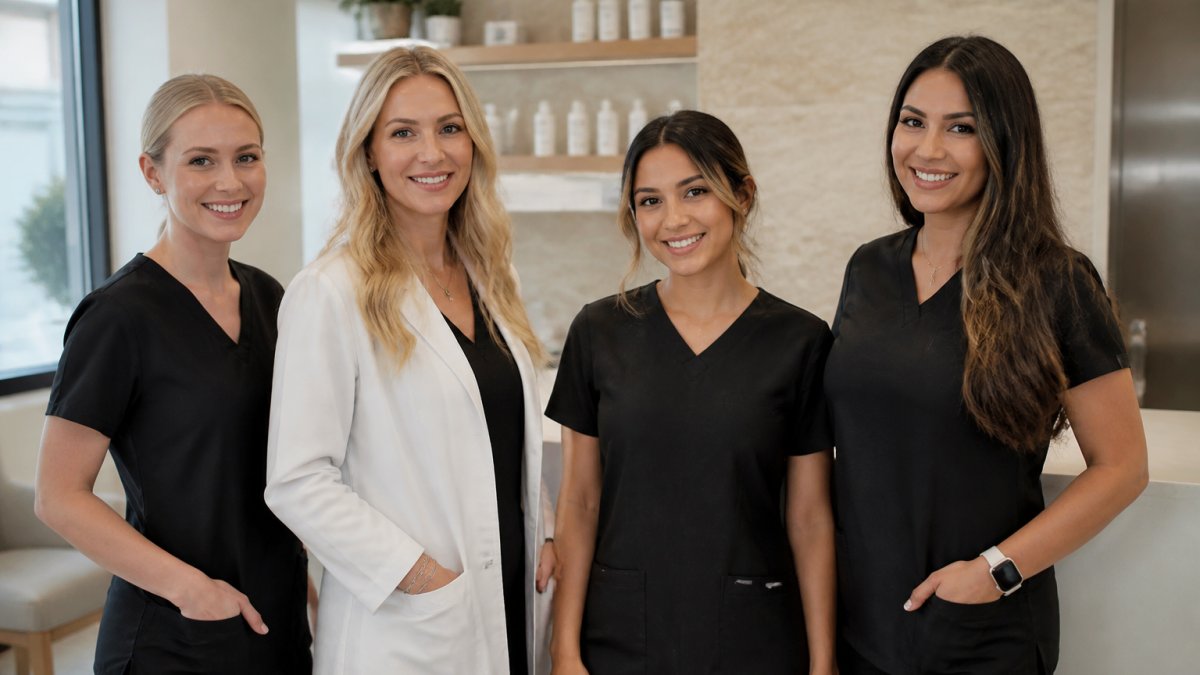
At Coastal Aesthetics NY, we're a Nurse Practitioner-led medical aesthetics practice, so our perspective sits on the clinical side of that line. For a closer comparison of spa types and tips on choosing a med spa, see our Long Island Spa Guide: How to Choose a Med Spa.
Where Massage Studios and Beauty Salons Fit In
A massage studio does one thing: massage. That focus often means better bodywork and lower prices than a full-service spa, but no facials, no skincare, and no medical treatments.
A beauty salon handles hair, nails, and sometimes basic esthetics. Neither a massage studio nor a beauty salon is equipped for injectables, energy-based skin treatments, or anything requiring medical supervision. If your goal is purely relaxation, they're efficient choices.
Day Spa vs Medical Spa: Which One Fits Your Goals?
The fastest way to decide is to name your goal before you book. Day spas are built for relaxation and maintenance: massage, facials, saunas, hot tubs, and a tranquil setting.
One honest limitation of the day spa model: results are temporary and surface-level by design. That's fine for pampering, but a facial won't change acne scarring or facial volume loss.
- Choose a day spa for relaxation, celebration, couples treatments, or a spa party
- Choose a medical spa for skin quality, fine lines, volume loss, or hair thinning
- Choose a massage studio for bodywork alone
Matching the Setting to the Occasion
A birthday, bridal weekend, or anniversary fits a hotel spa or full-service day spa with amenities. A weekday lunch break fits a medical spa appointment with minimal downtime. A stretch session and massage fit a boutique studio.
The mistake we see most often is booking a relaxation spa for a clinical goal, then feeling disappointed. Match the setting to the outcome first, then compare prices.
Medical Spa Provider Credentials: Who Should Be Holding the Needle?
Credentials are the single most important filter when choosing a long beach spa for injectables or skin treatments. In the United States, injectable and energy-based treatments must be performed or supervised by a licensed medical professional, and the rules vary by state. New York State regulates who may perform these procedures, so ask directly who will be treating you and what their license is.
The License Types You'll Encounter
Medical spas in the area typically staff one or more of the following. Knowing the difference tells you what each provider is legally allowed to do:
- Physician (MD or DO). Holds an unrestricted medical license and can perform or supervise the full range of aesthetic treatments. In many states, a physician must provide oversight of a medical spa even when they are not on site.
- Nurse Practitioner (NP). Holds an advanced practice license and can assess, plan, and perform many aesthetic treatments under the scope defined by state law. A board-certified NP has passed national certification in a specialty, such as adult-gerontology acute care (AGACNP-BC) or adult-gerontology primary care (AGPCNP-BC).
- Physician Assistant (PA). Licensed to practice under a supervising or collaborating physician, with scope set by state law.
A technician with a weekend certificate and no medical license is not the same as a licensed provider, no matter how confident the marketing sounds. If the person holding the needle can't tell you their license type and who supervises them, that is your answer.
What to Verify Before You Book
A short verification routine catches most problems:
- Look up the license. Every state medical board maintains a free license lookup. Search the provider's name and confirm the license is active and in the correct category.
- Ask who provides oversight. For NPs and PAs, ask whether a physician collaborates or supervises and who handles complications after hours.
- Confirm the treatment room. Medical treatments should happen in a private room with the equipment and supplies appropriate to the procedure, not an open bay.
- Ask for the product brand. FDA-approved injectables and devices are traceable. A provider who won't name the product is a red flag.
For a deeper look at evaluating providers, see our guide on how to choose a safe provider.
A Medical Spa Safety Checklist to Run Before You Book
Run this checklist before you commit to any medical spa visit:
- Confirm the treating provider's name, license type, and certification
- Ask whether a physician provides oversight and who handles complications
- Request the exact product brand names and confirm they are FDA-approved
A provider who hesitates on any of these is telling you something. The FDA's guidance on cosmetic products and approved injectables is a useful reference for verifying that a product is legitimately approved for cosmetic use.
Reading Reviews, Privacy, and Crowding Signals
Reviews tell you more than star ratings. Look for review count versus rating, and read the low-star reviews for patterns around privacy, crowding, and rushed appointments. A spa with a peaceful atmosphere in photos but complaints about being double-booked is a crowding problem.
Privacy matters for medical treatments. Ask whether treatments happen in a private room, not an open bay. Weekday availability is usually better than weekend availability for a calm, unhurried visit.
Questions to Ask at a Med Spa Consultation
A good consultation is a two-way conversation, and the questions you ask reveal as much as the answers. Ask these before agreeing to any treatment plan:
- What are you recommending, and what would you recommend if I weren't here to buy anything today?
- How many sessions will I realistically need, and what happens if I stop after one?
- What downtime should I expect, and when will I look presentable?
- Can I see before-and-after photos of patients with my features and skin tone?
- What are the risks, and how are complications handled?
- What is the total service price, including any follow-up visits?
- Is there a plan for a special occasion timeline, such as a wedding in eight weeks?

If you're in your late 20s and want preventive care, say so plainly. A provider focused on natural-looking results will recommend something subtle rather than push unnecessary procedures.
Comparing Long Beach Spa Visits by Budget and Treatment Duration
Budget comparisons across spa types are tricky because pricing depends on the service, the provider, and the products used. Rather than quote figures we can't verify, here's a framework that lets you compare any two spas on the same terms.
| Spa Type | Typical Visit Length | What Drives Cost | Typical Price Band (USD) | Best For |
|---|---|---|---|---|
| Massage studio | 30-90 minutes | Session length, therapist experience | $60-$150 per session | Bodywork, stress relief |
| Beauty salon | 30-120 minutes | Service type, stylist level | $40-$200 per service | Hair, nails, basic esthetics |
| Day spa | 1-4 hours | Treatment menu, amenities, add-ons | $150-$400 for a half-day package | Relaxation, celebrations |
| Hotel spa | 1-4 hours | Amenities, resort pricing, gratuity policy | $200-$500 for a spa day pass plus treatment | Special occasions, couples |
| Medical spa | 30-90 minutes | Provider license, products, area treated | $200-$800 per treatment; series pricing often 10-20% lower per session | Skin quality, injectables, hair restoration |
These are starting points, not quotes. Always ask what the price includes: gratuity, facility fee, and add-ons are the three line items that most often turn a booking into a higher checkout.
What Actually Drives the Price
Three variables explain most of the spread:
- Provider time and license. A licensed massage therapist, an esthetician, and a Nurse Practitioner each carry different overhead. Medical treatments cost more because a licensed provider must assess, plan, and document the visit, not just perform it.
- Product cost. Injectable products and energy-based devices are the largest single cost in a medical spa visit. Ask which brand and how many units or vials the plan requires; that number, not the headline price, determines your total.
- Amenities and setting. Pools, saunas, robes, and a quiet lounge are baked into hotel and full-service day spa pricing. If you won't use them, a massage studio or medical spa is usually the better value.
Matching Duration to Your Goal
Treatment duration varies by goal, and the full timeline matters more than the first appointment:
- Single-visit relaxation: a 60- or 90-minute massage, a facial, or a day spa package fits in one afternoon.
- Medical injectables: the appointment itself is often under an hour, but plan for a consultation visit first and a two-week follow-up to assess results.
- Skin treatment series: most resurfacing or texture protocols span three to six sessions spaced two to four weeks apart, so the calendar cost is weeks, not minutes.
For medical treatments, ask for a written treatment plan with total cost before you commit. If budget is the deciding factor, flexible payment plans can spread the cost of a series of treatments.
Booking Your Medical Aesthetics Consultation
Booking a consultation is the low-risk way to compare a medical spa against the day spas on your list.
As one patient put it: "Coastal Aesthetics NY made the entire experience easy and comfortable from start to finish. The team was professional, attentive, and truly focused on my goals."
We focus on subtle results that enhance your features, using evidence-based treatments and a safety-first approach. You can explore our aesthetic services to compare treatments, or get in touch with our team to ask questions before you book.
Frequently Asked Questions
What should I look for when choosing a spa?
Start with the type of spa. A day spa focuses on relaxation services like massage and facials, while a medical spa performs treatments such as wrinkle reducers, fillers, and microneedling under medical supervision. For a long beach spa visit, confirm who performs the treatment, what credentials they hold, and whether a consultation is required before booking. Ask about pricing, treatment duration, and cancellation policies up front so there are no surprises.
How do I know if a medical spa is reputable?
Check who owns and staffs it. Reputable medical spas are led by licensed medical professionals such as nurse practitioners or physicians, and they will tell you their credentials without hesitation. Ask whether a consultation and medical history review happen before treatment, and whether products are sourced from legitimate manufacturers. A medical spa safety checklist should include verified credentials, a clean treatment space, and clear answers about risks and typical downtime.
What is the difference between a day spa and a medical spa?
A day spa is built around relaxation: massage, facials, body treatments, and sometimes saunas or hot tubs. A medical spa adds medical-grade services like injectables, laser treatments, chemical peels, and skin rejuvenation, delivered by licensed medical professionals. The day spa vs medical spa distinction matters most when your goal is changing skin quality or facial volume rather than simply unwinding. If you want results beyond relaxation, ask about credentials first.
What questions should I ask at a med spa consultation?
Ask who will perform the treatment and what their license and training are. Ask what results are realistic for your skin, what the risks and downtime are, and what happens if you are unhappy. Request before-and-after photos of clients with similar features, and confirm pricing includes follow-up visits. Bring your own questions too, especially if you have a special occasion coming up and need a specific timeline for looking refreshed rather than obviously treated.
The hardest part isn't finding a spa near you. It's choosing one that matches your goal and can prove its credentials. Coastal Aesthetics NY offers Nurse Practitioner-led consultations, personalized treatment plans built around your features, and a focus on natural-looking results with treatments like wrinkle reducers, dermal fillers, microneedling, and PRP hair restoration. Get started with Coastal Aesthetics NY and book a consultation that puts your goals, and your safety, first.