 blog
How Many PRP Treatments for Hair Loss? 4 to 6 Sessions
Last Updated: November 8, 2026
Quick Summary
Most people need three to six PRP treatments in an initial series, spaced roughly every three to six weeks. Your provider sets the exact number after a consultation and a look at your scalp, then adds booster sessions a few times a year.
- The initial series runs three to six sessions, with the exact count set after consultation.
- Sessions are spaced every three to six weeks, as set by your provider.
- Weeks 0-20 follow a monthly or near-monthly session pattern.
- Booster treatment every few months covers months 5-12 after the series ends.
- PRP does not produce permanent hair regrowth, and results fade over months if you stop.
Table of Contents
- How Many PRP Treatments for Hair Loss: The Typical 4 to 6 Session Plan
- How Often Should You Do PRP for Hair Loss?
- What Changes Your Recommended Number of Sessions
- PRP Hair Treatment Success Rate: What the Evidence Actually Shows
- PRP Treatment for Hair Cost: What Drives the Total
- Does PRP Regrow Hair Permanently?
- Before, During, and After: Preparation, Aftercare, and Safety
- Book a PRP Hair Consultation at Coastal Aesthetics NY
- Frequently Asked Questions
How Many PRP Treatments for Hair Loss: The Typical 4 to 6 Session Plan
Many people ask how many PRP treatments for hair loss they need. The right number depends on an individual evaluation. PRP treatments, or platelet-rich plasma treatments, use your own blood plasma to support hair follicles on the scalp. At Coastal Aesthetics NY, we build each plan around the person, not a fixed number.
Here is what that series looks like in practice:
- Initial series: three to six sessions
- Spacing: roughly every three to six weeks
- Maintenance: booster sessions a few times a year after the series ends
The exact count depends on your stage of hair thinning, your health, and how your scalp responds. Below, we break down what changes the number, what results to expect, and what to do if progress stalls.
Why the Initial Treatment Series Runs Three to Six Sessions
A single session will not do much on its own. Hair growth is a slow cycle, and follicles need repeated support to respond. That is why clinicians group sessions into a series.
The logic is simple. PRP preparations are made from a patient's own blood and contain growth factors. Spacing between sessions is set by the provider.
Your provider sets the final number after a consultation and a look at your scalp.
How a Single Treatment Session Works
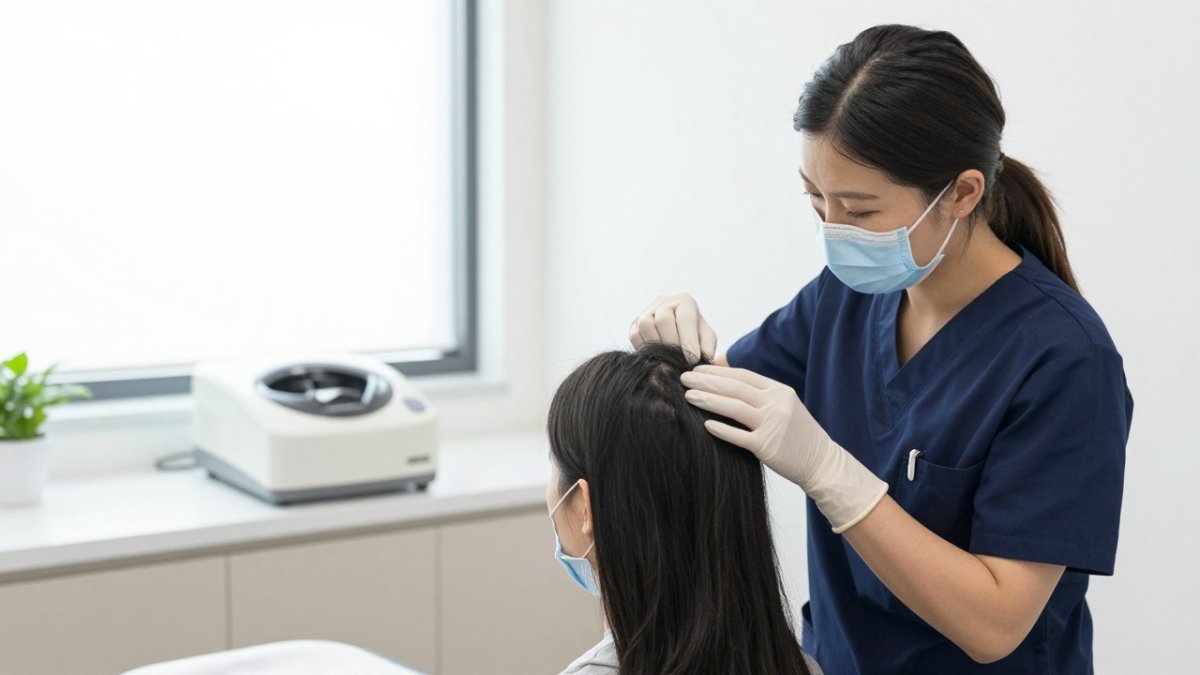
Platelet-rich plasma (PRP) is a preparation made from a small sample of your own blood, spun in a centrifuge to concentrate the platelets and growth factors before it is injected into the scalp. The whole process is minimally invasive and usually done in the office.
Here is the usual flow:
- A provider draws a small blood sample, much like a routine lab draw.
- The sample goes into a centrifuge to separate the platelets.
- The provider numbs the scalp if needed.
- Small injections deliver the plasma into thinning areas.
- You go home the same day, with light activity rules.
Sensations vary from person to person, and mild redness or tenderness on the scalp can occur after treatment.
Here is the typical PRP treatment schedule the article describes.
| Item | Value | Note |
|---|---|---|
| Initial series | Three to six sessions | Exact count set after consultation |
| Spacing | Every three to six weeks | Set by the provider |
| Maintenance | Booster sessions a few times a year | After the series ends |
| Weeks 0-20 | Monthly or near-monthly sessions | Initial series pattern |
| Months 5-12 | Booster treatment every few months | Follow-up phase |
| Year two and beyond | Maintenance treatment as needed | To hold results |
How Often Should You Do PRP for Hair Loss?
Spacing and maintenance intervals are set individually by your provider, who adjusts the treatment interval based on how your hair responds.
Spacing the Initial Series and Maintenance Boosters
Consistency matters more than any single session. If you skip weeks between treatments, the follicles lose momentum.
A typical pattern looks like this:
- Weeks 0-20: monthly or near-monthly sessions for the initial series
- Months 5-12: booster treatment every few months
- Year two and beyond: maintenance treatment as needed to hold results
Schedules vary by patient, and your provider will reassess at each follow-up.
What Changes Your Recommended Number of Sessions
No two scalps respond the same way. Several factors can push your plan toward the low end or the high end of the range.
- Stage of hair loss: early thinning often needs fewer sessions than advanced pattern hair loss.
- Hair type and scalp health: inflammation or scalp conditions may slow response.
- Medical history: certain conditions and medications affect healing and blood quality.
- Age and genetics: family history of hair loss can shape the long-term plan.
- Consistency: missed sessions weaken the series.
- Lifestyle: smoking, poor sleep, and stress can work against results.
We also look at how your hair sheds and regrows between sessions. That feedback loop is the best guide to whether to add sessions or move to maintenance.
PRP Hair Treatment Success Rate: What the Evidence Actually Shows
Published research on PRP for hair loss reports varying results, and treatment protocols can differ between providers.
When you evaluate a clinic, ask what preparation system it uses, how it sets platelet concentration, how many sessions it typically recommends, and how it tracks whether the plan is working.
How Progress Is Measured
Progress can be tracked over time using a few simple measures:
- Standardized photos taken at the same angle, distance, and lighting
- Hair density checks in the same marked scalp zones
- Shedding reports from you between visits
- Pull tests to gauge active shedding
- Clinician reassessment at each follow-up to compare against baseline
What to Do If PRP Does Not Work
Not everyone responds to PRP. If you finish a full series and see little change, discuss next steps with a qualified provider, who can review the diagnosis, the treatment protocol, and other options.
You can read a full stage-by-stage breakdown in our guide to PRP for hair loss results timeline stages to judge progress at each point.
PRP Treatment for Hair Cost: What Drives the Total
Pricing depends on quantity, dates, and delivery. For current prices or a quote, please see our website or contact our team directly.
What drives the total:
- Session count: a four-session series costs more than a three-session one, and advanced hair loss plans often land at the high end.
- Provider type: physician-led practices and those with advanced training typically charge more than walk-in spas, and the price usually reflects who performs the injections and how the protocol is supervised.
- Platelet concentration and preparation: double-spin systems and higher-concentration protocols can cost more per session than simpler preparations.
- Area treated: treating the full scalp costs more than treating a single thinning zone.
- Add-ons: some plans combine PRP with other treatments, which raises the total.
- Maintenance: boosters add cost over time and are the most commonly underestimated line item.
Ask for the total course price up front, including the initial series and a realistic first-year maintenance estimate, and ask whether follow-up visits are included. If cost is a concern, flexible payment plans can help spread it out. You can explore financing options for aesthetic treatments to make a multi-session plan more manageable.
Does PRP Regrow Hair Permanently?
No. PRP does not produce permanent hair regrowth on its own. It supports follicles and can improve density while you keep up with treatments. Stop the sessions, and results typically fade over months.
Think of it as ongoing care, not a one-time fix. Long-term results depend on:
- Staying on a maintenance schedule
- Managing the underlying cause of hair loss
- Combining PRP with proven treatments when appropriate
For many patients, PRP works best as part of a broader plan rather than a stand-alone cure.
Before, During, and After: Preparation, Aftercare, and Safety
Preparation and aftercare instructions vary by patient. Your provider will explain the specific steps to follow before and after your session.
Watch out: mild bruising and swelling can happen, but signs of infection such as spreading redness, fever, or severe pain need prompt medical attention. Tell your provider about any blood or bleeding disorders before treatment. If you want the full picture, read our guide to PRP for hair loss side effects.
Book a PRP Hair Consultation at Coastal Aesthetics NY
A personalized plan starts with an individual assessment. Our board-certified Nurse Practitioners, Joseph Pham, NP (AGACNP-BC) and Jennifer Jones, NP (AGPCNP-BC), build personalized plans around your goals and scalp health. We focus on clear education at every step. You can explore our aesthetic and hair restoration services, or contact our team to schedule your consultation.
The number of sessions is a starting point, not a promise. The real test is how your scalp responds over the first few months. Coastal Aesthetics NY offers personalized treatment plans, treatments performed by qualified medical professionals, and a focus on enhancing your features rather than changing them. Get started with Coastal Aesthetics NY and build a hair restoration plan that fits your goals.
Frequently Asked Questions
Can PRP regrow hair permanently?
No. Results vary by individual, and PRP is not a guaranteed treatment for hair loss. Results depend on the cause of your thinning, your individual response, and whether you keep up maintenance sessions. Pattern hair loss is ongoing, so most people need booster treatments to hold onto gains. PRP is also not a cure for scarring alopecia or hair loss from medical conditions, which need separate evaluation. A consultation can confirm whether you are a candidate.
Are 3 PRP sessions enough?
The number of sessions needed varies by individual, and your provider will determine the right plan for you. Your count depends on how much density you have lost, how long you have been shedding, and how your scalp responds. A provider typically reassesses after the first few sessions and adjusts the plan. Stopping at three without a reassessment may leave you short of the density you were aiming for.
How long does it take to see results from PRP for hair loss?
Changes in shedding and density can take time to become visible, and results vary between individuals. Hair grows slowly, so patience matters. Your provider will usually schedule a follow-up to compare photos and track progress. If you see no change after a full initial series, that is the point to discuss alternatives rather than adding more sessions indefinitely.
Why am I losing more hair after PRP?
A short increase in shedding right after injections is common and usually temporary. If shedding continues well beyond a few weeks or comes with scalp pain, redness, or swelling, contact your provider. Persistent shedding can also reflect an unrelated issue such as thyroid problems or iron deficiency, which is worth checking.