 How-to
7 Things to Know Before Booking a Spa Facial in 2026
Last Updated: November 7, 2026
Quick Summary
A spa facial is a professional skin treatment that cleanses, exfoliates, extracts, and hydrates the face, customized to your skin type and concerns. When searching for a spa facial near you, choose a provider who assesses your skin before selecting products and techniques rather than running a standard routine. Ask who will perform the treatment and what their credentials are.
- A thorough facial starts with a conversation about your skin history, goals, and sensitivity.
- Ask whether extractions, masks, and peels are included in the base price or billed as add-ons.
- Reviews that name the provider and describe skin type context are more useful than star averages.
- Skip waxing, threading, or shaving the treatment area for at least 24 hours before your appointment.
- Skipping sun protection after a facial or peel can undo the treatment and increase pigmentation risk.
Table of Contents
- What a Spa Facial Near Me Actually Involves
- How to Choose a Facial Spa That Fits Your Skin
- Medical Spa Facial Treatments vs. Day Spa Facials
- What Facial Spa Prices Cover and Why They Vary
- How to Read Facial Spa Reviews Before You Book
- Before, During, and After Your Appointment
- Booking Your Consultation at Coastal Aesthetics NY
- Frequently Asked Questions
What a Spa Facial Near Me Actually Involves
A spa facial is a professional skin treatment that cleanses, exfoliates, extracts, and hydrates the face, customized to your skin type and concerns. When you search for a spas facial near me, you are really looking for a provider who will assess your skin before choosing products and techniques, not just run a standard routine.
A thorough facial starts with a conversation about your skin history, goals, and sensitivity. That step matters more than the products used. A facial for acne-prone skin looks very different from one built for aging skin, and a good provider adjusts mid-treatment based on how your skin responds.
Facial sessions at many providers can include cleansing, gentle exfoliation, steam, extractions when appropriate, a facial massage, a mask, and finishing products, and some include aromatherapy or a brief relaxation component. You can browse the aesthetic services in Oceanside, NY to see the facial and skin treatments offered. The services listed on a menu are starting points, not fixed scripts.
How to Choose a Facial Spa That Fits Your Skin
Choosing well comes down to two questions: does the treatment match your skin, and is the person performing it qualified to assess it? Get those right and the rest is detail.
Match the Treatment to Your Skin Type and Goals
Different skin needs different approaches, and a customized facial should reflect that. Here is how we think about matching treatment to skin type:
| Skin Type or Concern | What to Look For | What to Avoid |
|---|---|---|
| Acne-prone skin | Gentle cleansing, targeted exfoliation, careful extractions | Heavy occlusive products, aggressive scrubs |
| Aging skin | Hydrating treatments, collagen-supporting options, facial massage | Over-exfoliation that irritates the barrier |
| Sensitive skin | Patch testing, fragrance-free products, shorter sessions | Strong peels, heat-heavy protocols |
| Dull or uneven texture | Chemical peels, microneedling consultation | DIY-level intensity at home |
| Dehydrated skin | Layered hydration, masks, barrier support | Hot steam for extended periods |
Bringing your current skincare products to a consultation, or photos of them, can help a provider spot potential mismatches.
Check Who Is Performing the Treatment
Ask directly who will perform your treatment and what their credentials are. In a medical spa, treatments may be performed by Nurse Practitioners, registered nurses, or licensed estheticians working under supervision. The scope of what each can do varies by state, so ask about the specific treatment, not just the title.
At Coastal Aesthetics NY, our treatments are led by board-certified Nurse Practitioners, including Joseph Pham, NP (AGACNP-BC) and Jennifer Jones, NP (AGPCNP-BC), with over a decade of combined experience. For anyone comparing providers, our Long Island spa guide walks through the questions worth asking before you commit.
Medical Spa Facial Treatments vs. Day Spa Facials
The difference between a day spa and a medical spa comes down to clinical oversight and treatment range. A day spa focuses on relaxation and surface-level skincare. A medical spa operates under medical direction and can offer treatments that reach deeper into the skin.
Medical spa facial treatments may include chemical peels, microneedling, PRP, collagen-stimulating treatments, and dermal fillers or Botox as separate services. These are clinical procedures with real recovery considerations, not just pampering. Day spa facials typically focus on cleansing, massage, masks, and light exfoliation.
Neither is better in the abstract. If you want relaxation and general skin maintenance, a day spa fits. If you have acne scarring, pigmentation, or texture concerns that need a clinical plan, a medical spa is the more appropriate setting. Our team covers this trade-off in more detail in our guide on whether a spa visit is worth it.
What Facial Spa Prices Cover and Why They Vary
Facial spa prices vary widely, and the range usually reflects four things: the provider's credentials, the treatment's complexity, the products used, and the time allotted. A 30-minute express facial and a 90-minute clinical treatment are not comparable purchases, even if both appear on the same menu.
Facial prices vary by provider, treatment type, and products used. Pricing depends on the treatment and what is included, so a provider's menu or quote is the reliable source for what you will actually pay. What matters more than the headline number is what the number includes.
Ask what the price covers before you book. Extractions, masks, add-ons, and post-treatment products are sometimes billed separately. A lower headline price can climb once add-ons are included. Use this checklist when comparing menus:
- Duration. Confirm the treatment time, not just the appointment slot. A 50-minute facial and a 90-minute facial are different products.
- Extractions. Ask whether extractions are included or billed as an add-on, and whether there is a limit.
- Masks and peels. Clarify whether a chemical peel, LED, or specialty mask is part of the base price or an upgrade.
- Product lines. Clinical or medical-grade products often carry a higher price than a standard spa line.
- Provider type. A licensed esthetician, a registered nurse, and a Nurse Practitioner may be priced differently for the same nominal treatment.
- Series pricing. Many providers discount a package of sessions versus a single visit; ask how the per-session price changes.
We do not publish fixed pricing because every treatment plan is built around the individual. For current pricing, contact our team or ask during your consultation. If cost is a concern, flexible payment options through Cherry can spread the cost of a treatment plan over time.
Watch out: a price quoted without a consultation may not reflect what your skin actually needs, so treat any menu price as a starting point and confirm the full cost in writing before the appointment.
How to Read Facial Spa Reviews Before You Book
Facial spa reviews are most useful when you read for pattern, not for star average. One glowing review tells you little. Ten reviews mentioning the same strength or the same complaint tells you a lot.
Here is what we suggest scanning for:
- Provider names. Reviews that name the person who treated them are more useful than anonymous praise.
- Skin type context. A reviewer with oily, acne-prone skin gives you better information if your skin is similar.
- Before-and-after detail. Look for reviewers describing what changed and over what timeline, not just "loved it."
- Consistency of complaints. Repeated mentions of rushed consultations or pushy upselling are a warning sign.
- Response quality. How a business replies to a critical review often says more than the review itself.
Customer ratings matter, but a provider who explains their reasoning in a consultation is worth more than a perfect score. One patient, Clarice Turner, described feeling "informed, cared for, and confident" in her treatment choice.
Before, During, and After Your Appointment
A first facial is easier when you know what each stage looks like. Here is a practical walkthrough from the days before to the week after.
Before: the week of your appointment. Arrive with a clean face, and ask your provider whether to skip retinoids, exfoliants, and at-home peels for a few days beforehand. Tell your provider about any medications, recent procedures, or active breakouts. If you have a history of cold sores, mention it, since some treatments can trigger them. Bring a list or photos of your current skincare products so the esthetician can flag ingredients that may interact with the treatment.
Before: the day of your appointment. Avoid heavy makeup, and skip waxing, threading, or shaving the treatment area for at least 24 hours. Eat and hydrate normally. If you are prone to sensitivity, ask whether a patch test is available for any product or peel being considered.
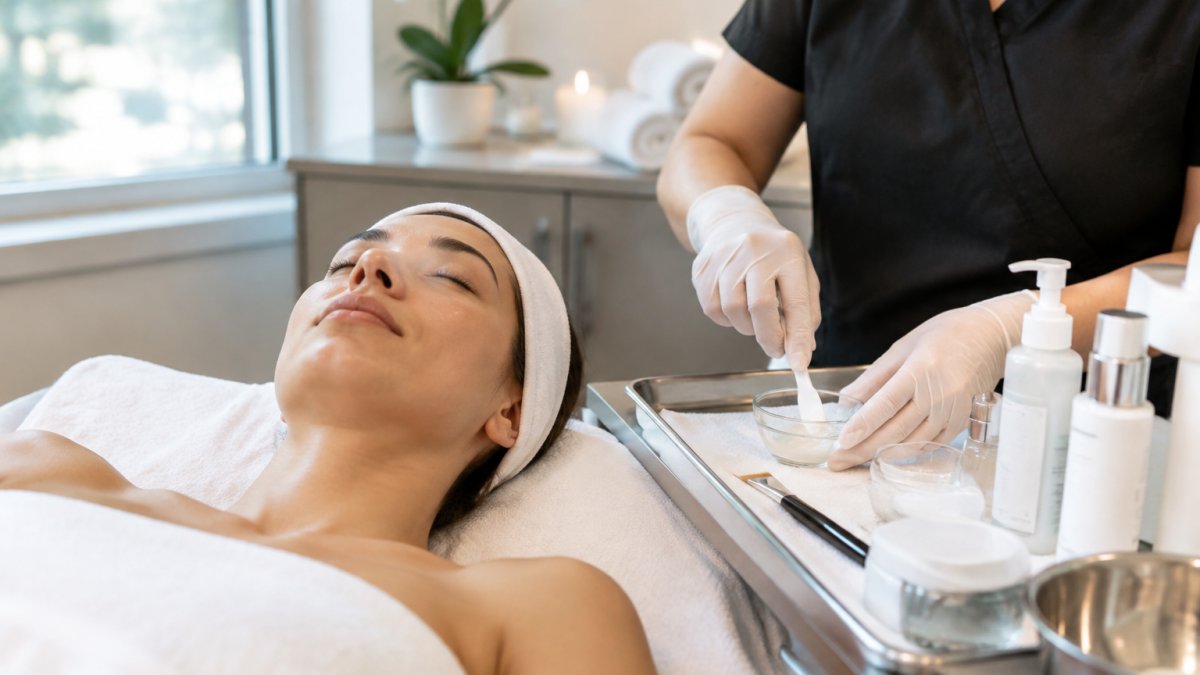
During: what happens in the room. Most sessions follow a sequence: a consultation and skin assessment, cleansing, gentle exfoliation, steam, extractions when appropriate, a facial massage, a mask, and finishing products. Some include aromatherapy or a brief relaxation component. Some exfoliants can cause mild tingling, and extractions involve pressure. Speak up if anything stings beyond a mild tingle.
After: the first 24 hours. Your skin may look flushed for a few hours, and that is normal. Keep the routine simple: gentle cleanser, moisturizer, sunscreen. Skip harsh actives for a few days. Avoid hot yoga, saunas, and heavy sweating for the rest of the day if your skin is reactive.
After: the first week. Watch out: skipping sun protection after a facial or peel can undo the treatment and increase pigmentation risk, so plan for shade and broad-spectrum SPF. Hold off on retinoids, acids, and scrubs until any redness settles, and resist picking at extraction sites. If you notice prolonged irritation, swelling, or a rash, contact your provider rather than treating it at home.
When to ask for a medical review. If you have a history of skin cancer, severe rosacea, active infections, or are pregnant or nursing, tell your provider before booking. A medical spa can loop in a qualified clinician when a concern falls outside routine esthetic care.
Booking Your Consultation at Coastal Aesthetics NY
Finding the right facial provider often starts with a consultation. A consultation lets a qualified provider assess your skin, review your history, and recommend a plan that fits your goals and timeline.
At Coastal Aesthetics NY, we build personalized treatment plans around your goals, anatomy, and skin health, with an emphasis on subtle, natural-looking results. Our services include wrinkle-reducing treatments, dermal fillers, collagen-stimulating treatments, microneedling, PRP, chemical peels, hair restoration, and advanced skin rejuvenation, performed by qualified medical professionals.
If you are ready to talk through your options, get in touch with our team to schedule a consultation.
Your skin deserves a plan built around it, not a standard menu item. Coastal Aesthetics NY offers personalized treatment plans, board-certified Nurse Practitioner care, and a focus on natural-looking results. Get started with Coastal Aesthetics NY and book a consultation to find the right facial for your skin.
Frequently Asked Questions
How much is a facial at a spa?
Facial spa prices depend on the treatment type, the provider's credentials, and the products used. A basic day spa facial usually costs less than a medical spa facial that includes clinical-grade peels, microneedling, or device-assisted rejuvenation. Pricing depends on the individual treatment plan, so ask for a quote after your consultation rather than comparing headline numbers alone.
What is the difference between a spa facial and a medical spa treatment?
A day spa facial focuses on cleansing, exfoliation, massage, and relaxation. Medical spa facial treatments are performed under medical oversight and can include chemical peels, microneedling, PRP, and collagen-stimulating procedures that act on skin texture, pigmentation, and acne scarring. If your goal is relaxation, a day spa works; if you want measurable change in skin health, look for a provider led by licensed medical professionals.
How do I choose a reputable facial spa?
Start with credentials: confirm who performs the treatment and whether a medical professional oversees the plan. Read facial spa reviews for comments on consultation quality and natural-looking results, not just ambiance. Ask what products are used, what training the esthetician or nurse practitioner holds, and what aftercare is included. A provider who asks about your skin history and goals before recommending anything is a good sign.
What should I ask before booking a facial?
Ask who will perform the treatment and their license or certification, what the facial includes and how long it takes, which products and devices are used, and what downtime to expect. Confirm the cancellation policy and whether a consultation is required first. If you have acne scarring, sensitivity, or an upcoming event, say so at booking so the provider can plan a treatment timeline that fits.