 How-to
7 Facial and Peeling Steps for Smoother Skin
Last Updated: November 12, 2026
Quick Summary
A facial is a gentle multi-step treatment that cleanses, exfoliates, extracts, and hydrates with no downtime, while a chemical peel applies an acid solution to remove damaged outer layers and correct texture, tone, and dark spots. Pairing facial and peeling treatments works best when a facial handles upkeep and a peel targets specific concerns.
- A facial refreshes the surface, while a peel targets the outer layer of the skin.
- Mild peels are often repeated every few weeks, and medium peels need more space between sessions.
- Patch test a home peel on the jawline or inner forearm and wait 24 to 48 hours.
- A reasonable cadence for a mild at-home peel is once every one to two weeks.
- Daily broad-spectrum sunscreen is not optional after a peel to protect results.
Table of Contents
- Facial vs Chemical Peel: Key Differences
- How Peels Work on Skin Layers
- Types and Strengths of Facial Peels
- Facial and Peeling at Home: Safety and Limits
- Side Effects of Chemical Peel on Face
- Book Your Personalized Peel Consultation
- Frequently Asked Questions
Facial vs Chemical Peel: Key Differences
The two treatments are often confused, but they work on different levels. A facial focuses on maintenance and relaxation. A chemical peel focuses on correction, like dark spots, acne scars, and fine lines.
Here is the core distinction in plain terms:
- Facial: gentle, no downtime, good for hydration and glow
- Chemical peel: stronger exfoliation, some downtime, good for texture and tone
- Best combo: a facial for upkeep, a peel for specific skin concerns
The right starting point depends on your skin goal rather than on trends.
| Feature | Facial | Chemical Peel |
|---|---|---|
| Depth | Surface only | Surface to deeper layers |
| Downtime | None to minimal | Minimal to several days |
| Best for | Hydration, glow, relaxation | Texture, tone, acne, scars |
| Frequency | Monthly | Spaced 2-6 weeks apart |
| Strength | Gentle | Mild to deep |
The table above shows why these two treatments are not interchangeable. A facial is generally a gentle option, while a chemical peel typically benefits from a professional skin assessment first.
How Peels Work on Skin Layers
Chemical peels work by applying a chemical solution that loosens the bonds between dead skin cells, so the outer layer sheds and fresh skin rises to the surface.
Your skin has several layers. The outer layer, the epidermis, holds most dead skin cells and pigment. A peel targets this layer first.
The strength of the solution decides how deep it goes. A mild peel lifts dullness. A medium peel reaches further into the epidermis.
According to the American Academy of Dermatology's guidance on chemical peels, results depend on the peel type, your skin, and how well you follow aftercare. That last point matters more than most people expect.
Types and Strengths of Facial Peels
Facial peels are generally grouped by depth: mild, medium, and deep. Each type uses different acids and suits different skin concerns.
If you are comparing options near you, our guide on how to find acid peels near me walks through what to look for in a provider and treatment plan.
A common mistake is choosing a peel by strength alone. The right peel matches your skin type, your concern, and your schedule. Someone with sensitive skin may do better with a series of mild peels than one medium peel. Someone with melasma needs a careful, conservative plan, because aggressive peels can sometimes worsen pigment.
Facial and Peeling at Home: Safety and Limits
At-home peels can be safe when they use low-strength acids and follow the label, but they cannot match a professional peel for depth or safety. The biggest risk with facial and peeling at home is going too strong, too often, or mixing acids with other actives. Most practitioners find that the patients who run into trouble are the ones who stack products rather than the ones who use a single, well-chosen peel.
A step-by-step path to choosing and using an at-home peel
- Identify your primary concern first. Dullness and mild texture respond to gentle alpha-hydroxy acids. Clogged pores and oily breakouts point toward salicylic acid. Dark spots and uneven tone need a conservative plan and, often, a professional assessment before any acid. Do not pick a peel by strength alone.
- Match the acid to your skin type. Glycolic acid has the smallest molecule and penetrates fastest, which makes it effective but more irritating for sensitive skin. Lactic acid is larger and gentler, a common starting point for dry or reactive skin. Salicylic acid is oil-soluble and reaches inside pores, which suits acne-prone skin. Mandelic acid has a larger molecule and is often chosen for deeper skin tones because it is associated with a lower risk of post-inflammatory hyperpigmentation.
- Start at the lowest concentration and shortest contact time. Over-the-counter peels usually contain mild concentrations of glycolic, lactic, or salicylic acid. Use the product exactly as labeled, and do not leave it on longer than directed to speed results.
- Patch test before the first full application. Apply a small amount to the jawline or inner forearm and wait 24 to 48 hours. A common pattern is for irritation to appear a day later, not immediately.
- Space sessions and rest your barrier. Give skin rest days between actives. A reasonable cadence for a mild at-home peel is once every one to two weeks, and less often if skin feels tight or stings.
- Stop and reassess if anything escalates. Persistent redness or burning, dark patches that worsen, breakouts that do not settle, or any blistering or scabbing are signs to stop home peeling and see a professional.
Screening checklist: when to postpone an at-home peel
Skip the peel and talk to a clinician first if any of the following apply:
- You are using a prescription retinoid, and you have not paused it for the period your provider recommends.
- You have an active cold sore, open cut, sunburn, or irritated skin in the treatment area.
- You have used isotretinoin within the past several months; many providers advise waiting longer, so confirm the timeline.
- You have a history of keloids, poor wound healing, or post-inflammatory hyperpigmentation.
- You are pregnant or breastfeeding and have not confirmed product safety with your provider.
- You recently had waxing, laser, or another exfoliating treatment on the same area.
Watch out: stacking a home peel with retinoids, scrubs, or vitamin C in the same week can cause irritation, redness, and barrier damage. Give your skin rest days between actives.
What at-home peels cannot do
Over-the-counter peels suit surface exfoliation. They are not designed to treat scars, deep pigment, or fine lines, and no at-home product reaches the dermis the way a medium or deep professional peel can. If your goal is correction rather than maintenance, a clinical assessment is the safer starting point. Our article on what to know before seeing a dermatologist for a chemical peel covers the screening steps, from skin history to medication review.
Side Effects of Chemical Peel on Face
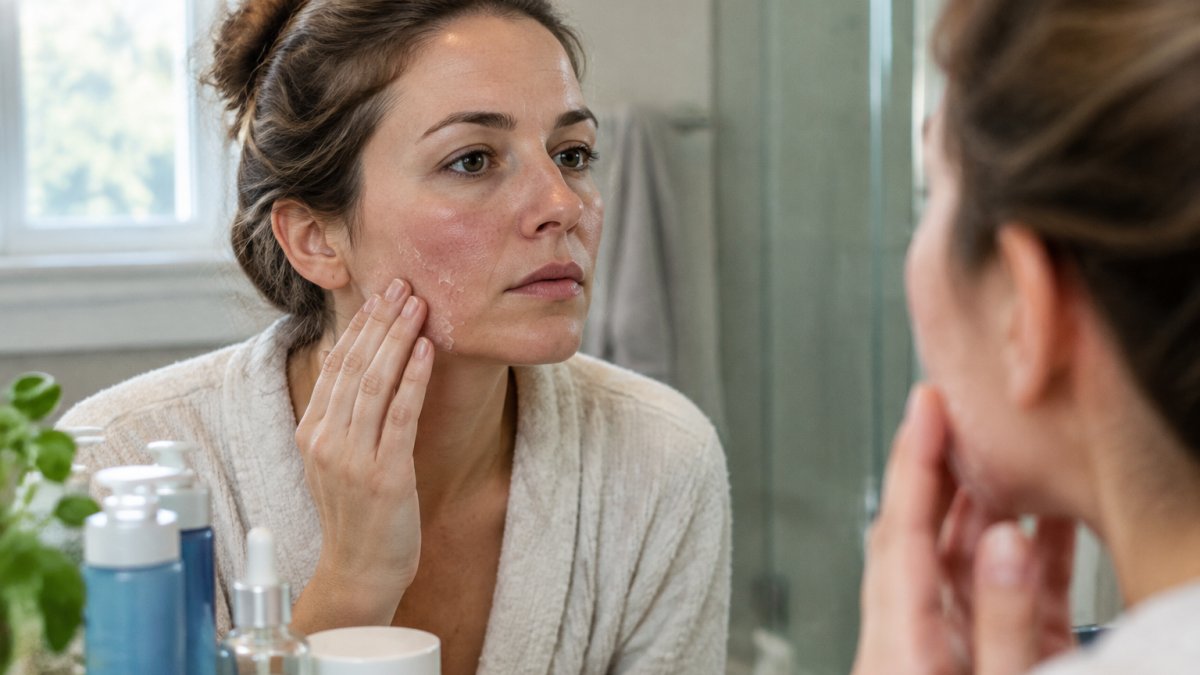
The most common side effects of a chemical peel on the face are redness, tightness, mild stinging, and peeling or flaking in the days after treatment.
Less common but possible effects include:
- Temporary darkening of the skin, called post-inflammatory hyperpigmentation
- Cold sore flare-ups in people with a history of them
- Infection, rarely, if aftercare is poor
- Scarring, rarely, with deep peels or improper technique
Book Your Personalized Peel Consultation
Choosing between a facial and a peel comes down to your skin goal, your schedule, and your skin's tolerance.
At Coastal Aesthetics NY, our board-certified Nurse Practitioners build personalized treatment plans around your skin, not a template. Our treatments include chemical peels and skin rejuvenation options, planned around your goals.
You can explore our aesthetic services to see the full range of treatments we offer. When you are ready to talk through your options, get in touch with our team to schedule your consultation.
Your skin deserves a plan built around it, not a one-size-fits-all peel. Coastal Aesthetics NY pairs clinical expertise with a focus on subtle, natural results, from chemical peels to microneedling and personalized skin rejuvenation.
Frequently Asked Questions
Is skin peeling good for your face?
Yes, when performed appropriately. Facial peeling removes dead skin cells from the outer layer, which can improve skin texture, tone, and clarity over time. Professional peels are tailored to your skin type and concerns, while at-home peels require caution to avoid irritation. Results vary by peel strength and frequency, so a consultation with a qualified provider helps determine what is safe and effective for your skin.
How much should a face peel cost?
Facial and peeling cost depends on the peel type, strength, provider expertise, and geographic location. Light peels generally cost less than medium or deep peels, which require more clinical oversight and recovery time. Because pricing varies by practice and treatment plan, request a personalized quote during your consultation rather than relying on national averages.
What is the difference between a facial and a chemical peel?
A facial is a multi-step treatment that typically includes cleansing, exfoliation, extraction, and hydration, with little to no downtime. A chemical peel applies a chemical solution to exfoliate skin layers more intensively, targeting concerns like acne, dark spots, and fine lines. Peels often involve visible flaking and require recovery time, while facials are gentler and more maintenance-focused.
What are the side effects of a chemical peel on the face?
Common side effects include redness, tightness, mild swelling, and flaking or peeling as the skin renews. These usually resolve within days to a week, depending on peel strength. Less common risks include irritation, post-inflammatory hyperpigmentation, and infection, particularly with deeper peels or inadequate aftercare. Sun protection and following your provider's instructions reduce these risks.