 blog
Microneedling Before and After: Real Results
Table of Contents
- What Microneedling Before and After Results Actually Show
- Microneedling Results Timeline: What Happens Week by Week
- Microneedling Results After One Session: What's Realistic
- How Many Microneedling Sessions for Acne Scars and Texture
- Microneedling Recovery and Aftercare for Best Results
- Factors That Affect Your Microneedling Before and After Outcomes
- Frequently Asked Questions
Last Updated: October 11, 2026
What Microneedling Before and After Results Actually Show
Microneedling before and after results showcase real skin transformations, but understanding what you're actually looking at matters. The visible changes in skin texture, tone, and appearance happen gradually over weeks and months, not overnight. The most honest before-and-after images reveal a specific pattern: immediate redness fades within days, subtle improvements emerge by week four, and meaningful transformation becomes visible around the three-month mark.
The key insight most people miss is that microneedling before and after photos tell different stories depending on when they're taken. A photo at day three shows inflammation. A photo at week eight shows early collagen remodeling. A photo at six months shows the real results. This is why consistent lighting, angle, and timing matter so much in evaluating whether microneedling actually works for your specific concerns.
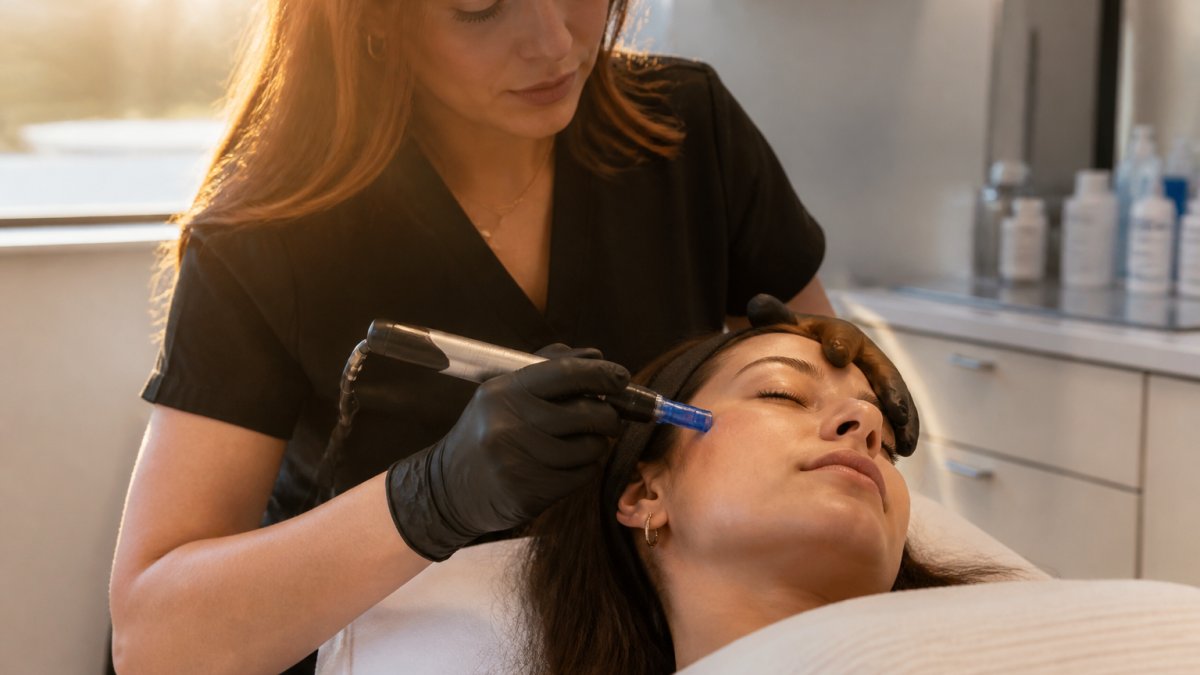
Real improvements typically include:
- Smoother skin texture with reduced roughness
- Finer appearance of acne scars and pitted areas
- More even skin tone and reduced pigmentation spots
- Tighter, firmer skin from collagen stimulation
- Smaller-looking pores and refined skin surface
The most reliable before-and-after comparisons use standardized photography: same lighting, same camera angle, same time of day, and photos taken at consistent intervals. Without these controls, it's difficult to separate actual skin improvement from lighting tricks or angle changes.
Microneedling Results Timeline: What Happens Week by Week
Microneedling results progress through distinct healing phases. Understanding this timeline sets realistic expectations for visible change.
Immediate Changes: Days 1-3
The first 72 hours show dramatic but temporary redness and swelling, the body's natural healing response. By day three, redness can be covered with makeup, though it remains visible under close inspection.
Collagen production hasn't ramped up yet. Week-one improvements come from reduced inflammation and hydration, not new collagen, making early before-and-after photos misleading.
Early Improvements: Weeks 2-4
By week two, redness resolves but subtle improvements emerge: smoother texture, softer fine lines, and improved brightness from initial collagen remodeling.
Weeks three and four show noticeable texture refinement, less pronounced acne scars, smaller pores, and more even skin tone, real but modest improvements that often trigger doubt despite active healing.
Visible Transformation: Weeks 5-12
By week five, results become genuinely impressive: undeniable texture improvement, meaningful scar softening, reduced fine lines, and improved firmness. By week eight, the transformation is visible enough that others notice.
Weeks nine through twelve represent peak results, with full collagen remodeling delivering brighter, smoother, more youthful skin.
Microneedling Results After One Session: What's Realistic
One session delivers measurable improvement for mild to moderate concerns, but deeper issues like significant acne scarring typically require multiple sessions.
One session is genuinely effective for:
- Mild texture irregularities and roughness
- Early fine lines and surface wrinkles
- Uneven skin tone and mild pigmentation
- General skin brightening and radiance
- Pore refinement and skin tightness
One session shows improvement but limited results for:
- Moderate to severe acne scarring
- Deep wrinkles and folds
- Significant collagen loss or skin laxity
- Extensive sun damage or pigmentation
One session produces satisfying results for mild to moderate concerns but is a starting point for deeper issues. Follow-up treatments four to six weeks later build on results.
How Many Microneedling Sessions for Acne Scars and Texture
Sessions needed depend on scar depth and type. Shallow boxcar scars typically improve significantly with three to four sessions; deeper rolling scars may require five to six or more.
A typical treatment plan looks like this:
| Timeline | Session Count | Expected Results |
|---|---|---|
| After 1 session | 1 | Subtle texture improvement, slight scar softening |
| After 3 months | 3-4 | Visible scar reduction, smoother texture, 40-60% improvement |
| After 6 months | 4-6 | Significant scar improvement, refined texture, 60-80% improvement |
| After 12 months | 6+ | Maximum collagen remodeling, most dramatic results |
Sessions spaced four to six weeks apart allow full collagen remodeling; closer spacing doesn't accelerate results, while wider spacing extends the timeline.
Consistency is critical: completing the full treatment plan yields dramatically better results than stopping early, as improvement is cumulative.
Microneedling Recovery and Aftercare for Best Results
Aftercare directly impacts healing, results visibility, and complication risk, with the first week being critical.
Standard Recovery Timeline and Expectations
Most people experience redness and mild swelling for three to seven days. Light oozing or bleeding in the first 24 hours is normal. By day three, redness can be covered with makeup; by day seven, most inflammation resolves.
Critical Aftercare Steps for Optimal Healing
Proper aftercare includes: avoid makeup and water for 24 hours; use gentle cleanser days 2-7; apply non-irritating moisturizer twice daily; use SPF 30+ for two weeks; skip active ingredients for one week; avoid heat, sweating, and chlorine for 48 hours to five days; sleep on your back initially.
Following aftercare carefully yields noticeably better results and faster healing; neglecting it extends inflammation and increases side effect risk.
Common Side Effects (Normal vs. Warning Signs)
Normal side effects that resolve on their own:
- Redness and mild swelling for three to seven days
- Slight oozing or pinpoint bleeding during and immediately after treatment
- Mild itching or tightness as skin heals
- Temporary dryness or flaking in days three to seven
- Slight increase in breakouts (days three to seven) as skin purges
- Temporary hyperpigmentation (brown or gray spots) on medium and darker skin tones, typically fading by week six to eight
Warning signs that require medical attention:
- Severe pain or burning that does not improve with over-the-counter pain relief
- Excessive swelling that worsens after day three or affects the eyes or lips
- Signs of infection: pus, warmth, increasing redness, fever, or red streaking
- Blistering or severe crusting beyond normal healing
- Persistent rash or hives (possible allergic reaction to serums or products)
- Keloid or hypertrophic scar formation (raised, thickened scars that grow beyond the treatment area)
- Persistent hyperpigmentation or hypopigmentation (loss of color) beyond eight weeks
- Nerve pain, numbness, or tingling that persists beyond two weeks
Contact your provider immediately if you experience any of these warning signs. Early intervention prevents complications and protects your results.
Healing Variations by Skin Type
Fair skin heals quickly with minimal complications; redness resolves by day five to seven, with results visible by week four.
Medium skin tones may experience temporary post-inflammatory hyperpigmentation (brown or gray spots) that fades over four to eight weeks with strict sun protection. Evaluate true results at week eight, not earlier.
Deeper skin tones have higher risk of hyperpigmentation and keloid formation, requiring shallower needle depths, lower intensity, and absolute sun protection. Report any keloid signs immediately. With proper technique and aftercare, microneedling is safe and effective on all skin tones.
When to Resume Normal Activities
Return to light activities within three to five days; avoid strenuous exercise and contact sports for one week. Makeup can be applied after 24 hours if skin isn't oozing.
Schedule microneedling at least two weeks before major events to allow redness to resolve and early results to appear.
Factors That Affect Your Microneedling Before and After Outcomes
Microneedling results vary significantly based on skin type, skin tone, and individual healing capacity. Understanding these differences helps you set realistic expectations and choose the right treatment intensity for your skin.
Results by Skin Type and Tone
Fair and light skin tones show texture and collagen improvements most visibly in photography, with clear contrast, noticeable redness resolution, and easy scar and pore refinement detection.
Medium skin tones respond equally well but experience more post-inflammatory hyperpigmentation (temporary darkening) in weeks two to six. Underlying improvement, texture, scars, firmness, is real but obscured in photos; wait until week eight or twelve for final comparisons.
Deeper skin tones respond excellently but have higher hyperpigmentation and keloid risk, requiring careful needle depth and experienced providers. Temporary pigmentation in weeks four to six can obscure improvement; professional clinical lighting is essential to reveal true texture and scar refinement.
Across all skin tones, microneedling stimulates collagen and improves texture. The differences are in healing timeline, temporary side effects, and how those changes appear in photography, not in the fundamental effectiveness of the treatment.
Age and Baseline Skin Quality
Younger skin (20s-30s) with good baseline collagen typically shows faster visible improvement and may need fewer sessions. Collagen remodeling happens more efficiently, and results often become obvious by week six to eight.
Middle-aged skin (40s-50s) responds well but may require more sessions to achieve the same degree of improvement because baseline collagen is lower. Results often take longer to become obvious, week eight to twelve, but are equally dramatic once collagen remodeling reaches peak effect.
Mature skin (60+) still responds to microneedling, particularly for texture and pore refinement. However, if significant skin laxity or deep wrinkles are present, microneedling alone may produce modest results; combining it with other treatments (radiofrequency, chemical peels, or injectables) often yields better outcomes. Results timelines are similar to middle-aged skin but may require six or more sessions for meaningful improvement in deep lines or significant sagging.
Lifestyle and Healing Factors
Sun exposure history dramatically affects results. People with significant sun damage may see faster improvement in pigmentation and texture because there is more to improve, but they may also have slower collagen production, requiring more sessions. Consistent sun protection during and after treatment accelerates visible results and prevents new damage.
Smoking slows collagen production and delays healing. Smokers often require more sessions and see results develop more slowly than non-smokers. Sleep deprivation, chronic stress, and poor hydration all impair the body's ability to produce new collagen, extending the timeline to visible results.
Hormonal factors matter too. People on hormonal birth control or hormone replacement therapy may experience different healing timelines or temporary pigmentation changes. Pregnancy is a contraindication for microneedling due to increased risk of melasma (dark patches) and unpredictable healing responses.
Needle Depth and Treatment Intensity
Microneedling depth ranges from 0.5 mm (at-home devices, minimal collagen stimulation) to 2.5 mm (professional clinical microneedling, significant collagen induction). Deeper needles stimulate more collagen but require longer recovery and carry higher risk of side effects, particularly on darker skin tones.
At-home microneedling devices (0.5-1.0 mm) produce subtle texture improvement and work best for maintenance or mild concerns. Results are modest but recovery is minimal.
Professional microneedling (1.5-2.0 mm) is the standard for meaningful scar and texture improvement. Recovery is three to seven days, and results are significant by week eight to twelve.
Your provider should customize needle depth based on your skin type, concerns, and healing capacity. Darker skin tones often benefit from slightly shallower depths (1.5 mm rather than 2.0 mm) to reduce hyperpigmentation risk while still achieving meaningful collagen stimulation.
Frequently Asked Questions
How long does it take to see microneedling results?
Most patients notice initial skin texture improvements within 2-4 weeks as inflammation subsides and healing begins. Visible changes in fine lines, acne scars, and skin tone typically appear between 6-8 weeks. Full collagen remodeling and maximum results develop over 3-6 months following your treatment course. Results continue to improve gradually as your skin rebuilds collagen and elastin in response to the controlled micro-injuries created during microneedling.
How many microneedling sessions are needed to see results?
Most patients benefit from a series of 3-6 treatment sessions spaced 4-6 weeks apart, depending on your specific concerns and skin condition. Acne scarring and deeper texture issues typically require more sessions than fine lines or general skin rejuvenation. Your Nurse Practitioner will create a personalized treatment plan based on your goals. Even a single session produces noticeable skin texture and tone improvements, though a complete treatment course delivers more dramatic and lasting results.
What does skin look like immediately after microneedling?
Immediately after treatment, your skin will appear red and may feel warm, similar to a mild sunburn. Some swelling and minor pinpoint bleeding are normal. Most redness fades within 24 hours, though your skin may remain slightly flushed for 2-3 days. You may also experience mild flaking or peeling as your skin heals. These temporary effects are signs that the treatment is working, your skin is activating its natural healing and collagen-production response.
Is microneedling at home actually effective compared to professional treatment?
Professional microneedling performed by qualified medical professionals delivers significantly stronger results than at-home devices. Professional treatments use deeper needle penetration, controlled technique, and medical-grade equipment to stimulate robust collagen production. At-home devices have shallower penetration and lower intensity, producing minimal collagen remodeling. For meaningful improvement in acne scars, skin texture, fine lines, and overall skin rejuvenation, professional microneedling is far more effective. Your Nurse Practitioner can assess your specific needs and recommend the appropriate treatment intensity.