 blog
PRP Facial Before and After: Real Results and Timelines
Table of Contents
- What a PRP Facial Is and Why Before and After Matters
- How PRP Is Prepared and Paired With Microneedling
- PRP Facial Results Timeline: What Changes and When
- PRP Facial Before and After Photos: How to Read Them Honestly
- PRP Facial Recovery Time and Side Effects to Expect
- PRP Facial Aftercare: Protecting Your Results
- PRP Facial vs Vampire Facial and Other Treatments
- Conclusion: Setting Realistic Expectations Before You Book
- Frequently Asked Questions
Last Updated: October 16, 2026
What a PRP Facial Is and Why Before and After Matters
A PRP facial is a skin rejuvenation treatment that uses your own platelet-rich plasma to support collagen production and improve skin quality.
The "before and after" matters because visible change is the whole point.
Here's what most guides get wrong: they show dramatic photos with no timeline, no context, and no mention of variability.
Below, we break down what actually changes, when it changes, and how to read photos honestly.
How PRP Is Prepared and Paired With Microneedling
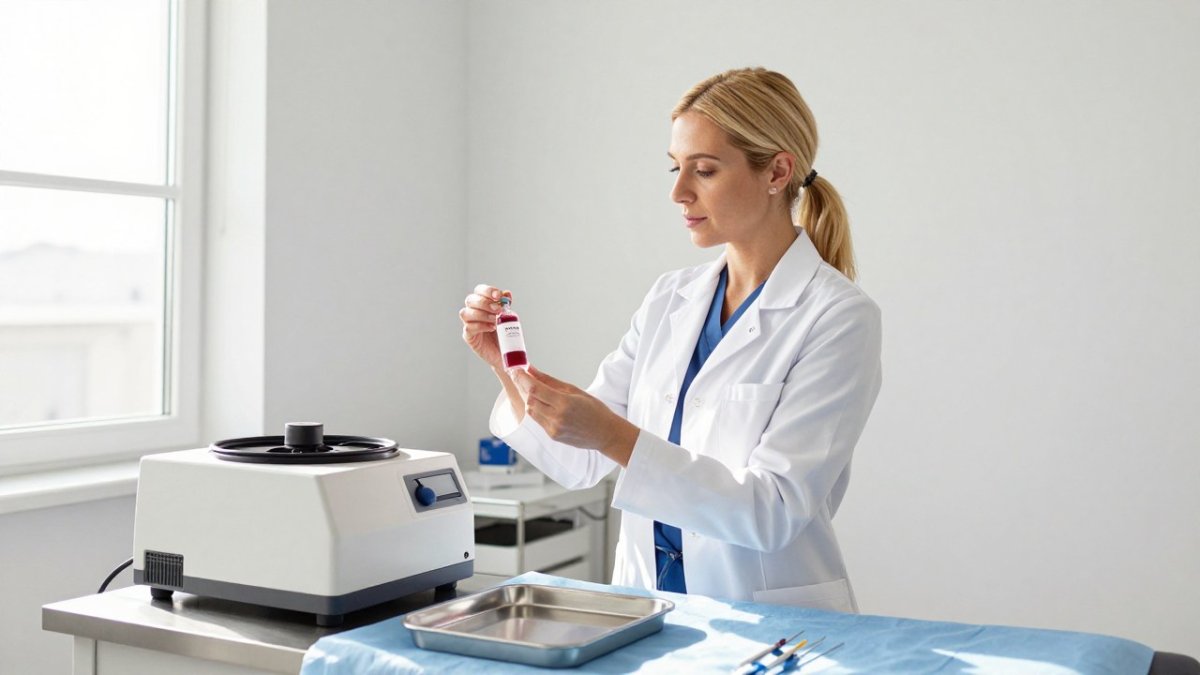
Preparation starts with a standard blood draw, the same kind you'd have at any clinic.
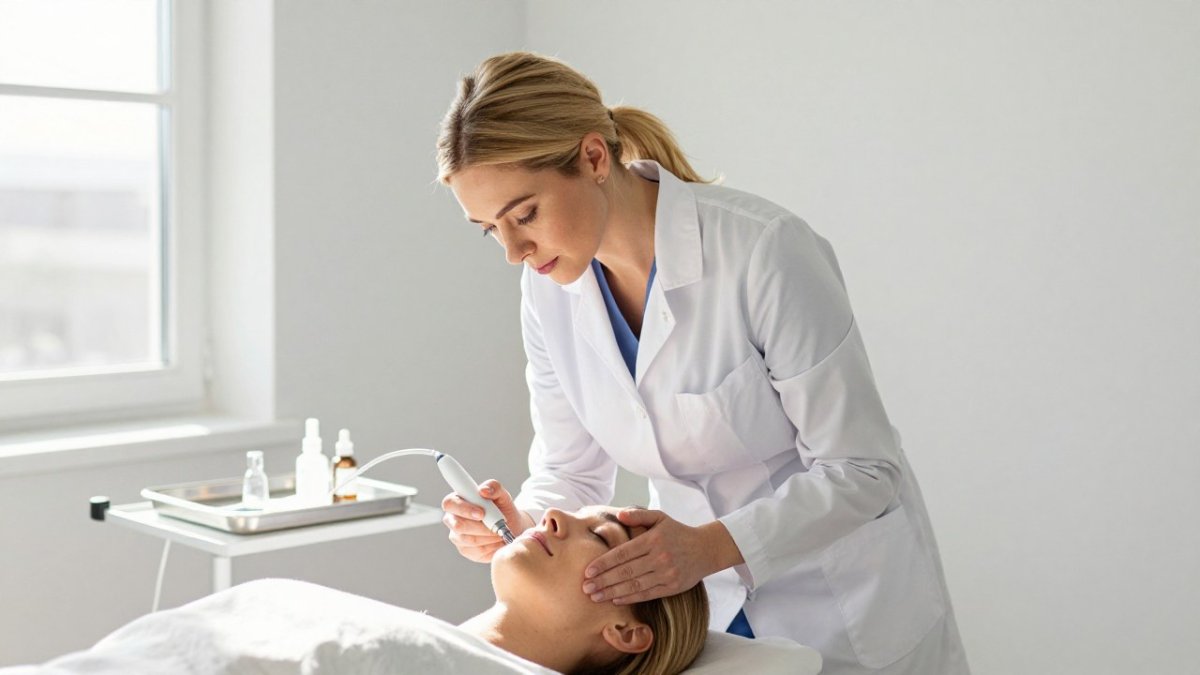
Microneedling creates tiny channels in the skin.
This pairing is why the treatment is sometimes called a "vampire facial." The name is catchy, but the process is simple and controlled.
The American Academy of Dermatology's guidance on microneedling notes that microneedling can improve texture and tone over a series of sessions.
- Step 1: Blood draw, a few minutes
- Step 2: Centrifuge spin to separate plasma
- Step 3: Numbing cream applied to the face
- Step 4: Microneedling across treatment areas
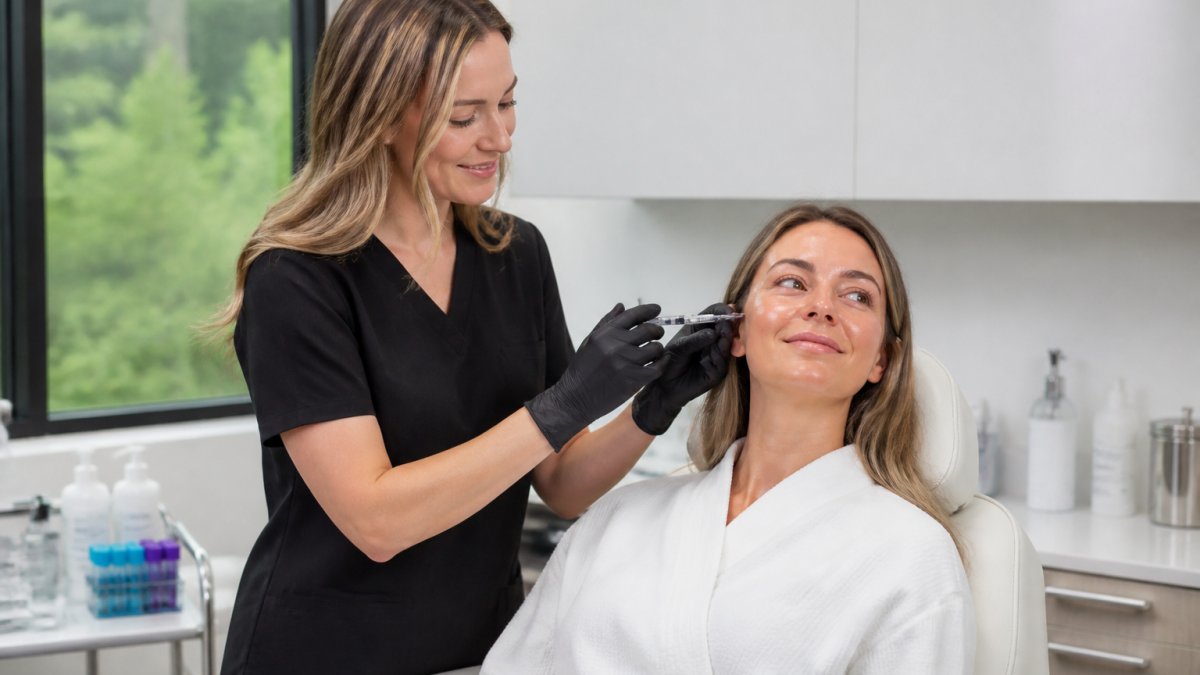
- Step 5: PRP applied to the skin
Most sessions take about an hour.
PRP Facial Results Timeline: What Changes and When
The PRP facial results timeline runs in weeks, not days. You won't see the full effect right after one session.
Here's a realistic breakdown:
| Timeframe | What You May Notice |
|---|---|
| Days 1-3 | Redness and mild swelling, similar to a sunburn |
| Week 1-2 | Skin feels smoother as surface healing completes |
| Weeks 3-6 | Early changes in tone and brightness |
| Weeks 6-12 | Firmer skin, improved texture, softer fine lines |
| Months 3-6 | Full effect after a full course of treatment |
Most people need multiple sessions, often spaced about four to six weeks apart. Some providers recommend a maintenance session later in the year.
Results vary. Skin quality, age, sun damage, and how many sessions you complete all play a role.
The key takeaway: patience matters more than any single session.
PRP Facial Before and After Photos: How to Read Them Honestly
PRP facial before and after photos are useful, but only if you know what to look for. Many images online are taken under flattering lighting or with filters.
Here's how to judge them fairly:
- Check the lighting. Before and after shots should use the same light and angle.
- Look for a timeline. A real photo set notes how many weeks passed.
- Count the sessions. One session looks different from three.
- Watch for filters. Smooth, poreless "afters" are a red flag.
- Ask about variability. No two faces respond the same way.
If a clinic won't show you consistent, clearly dated photos from patients with similar skin, ask why.
PRP Facial Recovery Time and Side Effects to Expect
PRP facial recovery time is short for most people, but "short" is not the same as "nothing happens." Knowing what each day looks like, and which symptoms are normal versus a reason to call your provider, is the part most before-and-after galleries skip.
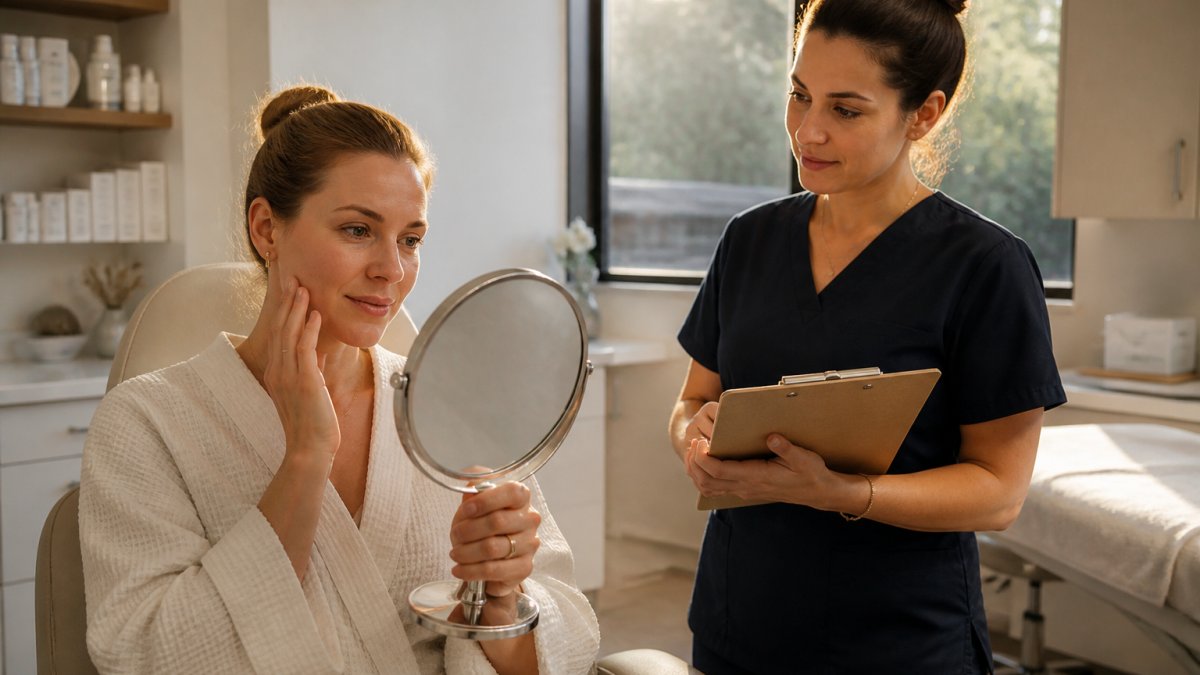
A realistic day-by-day recovery timeline
| Timeframe | What's typical | What helps |
|---|---|---|
| First 2-4 hours | Numbing cream wears off; skin feels warm, tight, and flushed | Gentle cool compress, no makeup |
| Day 1 | Peak redness, similar to a moderate sunburn; mild pinpoint bleeding may have stopped by the time you leave | Sleep slightly elevated, bland moisturizer |
| Days 2-3 | Redness fades to pink; slight swelling around the eyes and cheeks is common | Fragrance-free moisturizer, broad-spectrum sunscreen |
| Days 3-5 | Most visible redness resolves; skin may feel dry or flaky as micro-channels close | Continue gentle cleansing; do not exfoliate |
| Days 5-7 | Surface healing largely complete; makeup can usually resume once any pinpoint marks close | Resume normal skincare except actives |
| Weeks 2-4 | Skin looks calmer; collagen remodeling is underway beneath the surface | Sun protection is the priority |
Most people return to work and normal activities within one to two days. If you have a wedding, photo shoot, or presentation, a common pattern is to schedule treatment at least one week ahead so any residual pinkness has settled.
Common side effects
- Redness, like a mild to moderate sunburn
- Slight swelling or tightness, especially around the eyes
- Mild bruising at the blood draw site (usually the inner arm)
- Temporary sensitivity to touch
- Dryness or light flaking during the first week
- Small pinpoint marks where the microneedling device passed
These are expected and typically resolve without intervention.
Warning signs that warrant a call to your provider
Serious complications are uncommon, but any treatment that breaks the skin carries some risk. Contact your clinician if you notice:
- Spreading redness, warmth, or swelling that worsens after day three
- Pus, a foul odor, or a fever
- Increasing pain rather than decreasing pain
- A rash, hives, or blistering
- Cold sore outbreak if you have a history of oral herpes, antiviral pretreatment is often recommended
Who may not be a good candidate
A consultation should come first if you have any of the following:
- An active skin infection, open wound, or active acne breakout in the treatment area
- A bleeding disorder or you take blood-thinning medication
- A history of keloid scarring
- Certain blood or platelet disorders, or active cancer treatment
- Pregnancy or breastfeeding (many providers defer treatment)
- Recent isotretinoin use (many providers wait several months)
If you are unsure whether you qualify, a short consultation is far cheaper than an avoidable complication.
PRP Facial Aftercare: Protecting Your Results
Good PRP facial aftercare protects the work your skin is doing. The first 48 hours matter most.
Follow these steps:
- Skip makeup for the first 24 hours
- Avoid intense exercise and heavy sweating for 24-48 hours
- Stay out of direct sun and skip saunas or hot tubs for a few days
- Use a gentle, fragrance-free cleanser
- Apply a bland moisturizer and broad-spectrum sunscreen daily
- Don't pick or scrub at the treated skin
- Skip retinoids and exfoliating acids for about a week
Hydration and sleep also support healing. Boring advice, but it works.
PRP Facial vs Vampire Facial and Other Treatments
Terminology is the first thing to untangle, because it changes what a before-and-after photo is actually showing you.
PRP facial vs. vampire facial vs. PRP microneedling
- PRP facial is a broad term. It can mean PRP applied topically, PRP injected, or PRP delivered with microneedling.
- Vampire facial is a marketing nickname for the same family of treatments, named for the blood draw. It is not a distinct procedure.
- PRP microneedling is the most specific term: microneedling creates micro-channels, and PRP is applied during or immediately after so the plasma reaches deeper layers.
When you look at a before-and-after image, ask which of these three it represents. A PRP-only topical treatment and a PRP-plus-microneedling session do not produce the same result, and a photo labeled simply "PRP facial" may not tell you which one was performed.
How PRP compares to other skin rejuvenation options
| Treatment | Primary mechanism | Typical downtime | Best for |
|---|---|---|---|
| PRP with microneedling | Micro-injury plus growth factors to support collagen | 1-3 days of redness | Texture, tone, fine lines, overall quality |
| Microneedling alone | Controlled micro-injury to stimulate collagen | 1-3 days | Texture and tone without the plasma step |
| Chemical peel | Controlled exfoliation of surface layers | 2-7 days of peeling | Surface tone, discoloration, sun damage |
| Dermal fillers | Adds volume via hyaluronic acid or similar | Minimal to a few days of swelling | Volume loss, contours, folds |
| Laser resurfacing | Targeted light energy to resurface skin | 3-10+ days | Pigment, texture, deeper resurfacing |
| Collagen-stimulating injectables | Biostimulatory particles that prompt collagen | A few days of swelling | Firmness and volume over time |
What this means for reading before-and-after photos
If a photo shows dramatic improvement in skin texture and tone, it is most likely PRP with microneedling, not PRP applied topically alone. If a photo shows restored cheek volume, that is a filler result, not a PRP result. Matching the image to the actual procedure is the single most useful habit when comparing options.
Cost factors to expect
Pricing varies widely by market, provider credentials, and whether the session includes microneedling. Factors that typically move the price:
- Whether microneedling is bundled with the PRP application
- The number of sessions in a treatment plan (most plans involve a series, not one visit)
- The provider's credentials and the clinical setting
- Geographic market and medical spa overhead
Ask for a written treatment plan that lists the number of sessions, the interval between them, and the total cost, not just a per-session price.
How to choose
- Texture and tone are your main concern: PRP with microneedling is a reasonable fit.
- Volume loss or deep folds: fillers or collagen-stimulating injectables address the concern PRP cannot.
- Surface discoloration or sun damage: a chemical peel or laser may be more direct.
- You want a natural approach using your own biology: PRP fits that preference, but it is not a substitute for treatments that restore volume.
PRP pairs well with other treatments rather than replacing them. A consultation is the right place to match the option to your specific goal, because the same before-and-after photo can mean very different things depending on which procedure produced it.
Conclusion: Setting Realistic Expectations Before You Book
The honest truth about PRP facial before and after results is that they build gradually and vary by person.
What you can expect is a treatment that supports collagen production, improves skin texture and tone, and fits into a low-downtime routine. What you can't expect is a guarantee.
At Coastal Aesthetics NY, our board-certified Nurse Practitioners build personalized treatment plans around your goals and skin. We offer microneedling, PRP, collagen-stimulating treatments, and advanced skin rejuvenation, all focused on subtle, natural-looking results.
If you're ready to see what a realistic plan looks like for your skin, book a consultation with Coastal Aesthetics NY and get a timeline built around you.
Frequently Asked Questions
How many PRP facial sessions are needed to see results?
Most providers recommend a course of three sessions spaced about four to six weeks apart, though some protocols use seven-week intervals. Visible changes in skin texture and tone often begin after the first session but become more noticeable after the second or third. Maintenance sessions every six to twelve months help sustain results. The exact number depends on your skin concerns, such as scarring or discoloration, and how your skin responds. A consultation can help map a plan suited to your goals.
What is the difference between a PRP facial and a vampire facial?
The terms are often used interchangeably, but a vampire facial typically refers to microneedling combined with platelet-rich plasma applied to the skin. A PRP facial may involve PRP applied topically or injected, with or without microneedling. The key difference is the technique and depth of delivery. Both use your own platelet-rich plasma to support collagen production and skin rejuvenation. Ask your provider exactly what the treatment includes so you know what to expect.
How long does PRP facial recovery time usually last?
Redness and mild swelling typically fade within 24 to 72 hours after a PRP facial. Some people experience slight bruising or pinpoint bleeding at microneedling sites, which resolves in a few days. Most return to normal activities the next day with makeup-free skin for the first 24 hours. Strenuous exercise and sun exposure should be avoided for at least 48 hours. Following aftercare instructions helps minimize downtime and supports healing.
What should I expect before and after a PRP facial in terms of photos?
Before your session, your provider may take standardized photos in consistent lighting and angles. After treatment, follow-up photos are usually taken at each visit to track changes in skin texture, tone, and firmness. Results build gradually, so photos taken weeks apart show more than immediate ones. Ask to see before-and-after photos from patients with similar skin concerns. Keep in mind that lighting, camera quality, and angle can affect how results appear, so compare like with like.